
The Gate of Grief: Why a Collapse at Bab-el-Mandeb Could Trigger a Global Recession
What happens if the world's most critical maritime chokepoint closes? Dive into our full analysis of the Bab-el-Mandeb crisis and its massive economic impact.
Mr. Influenciado
3/28/20264 min read
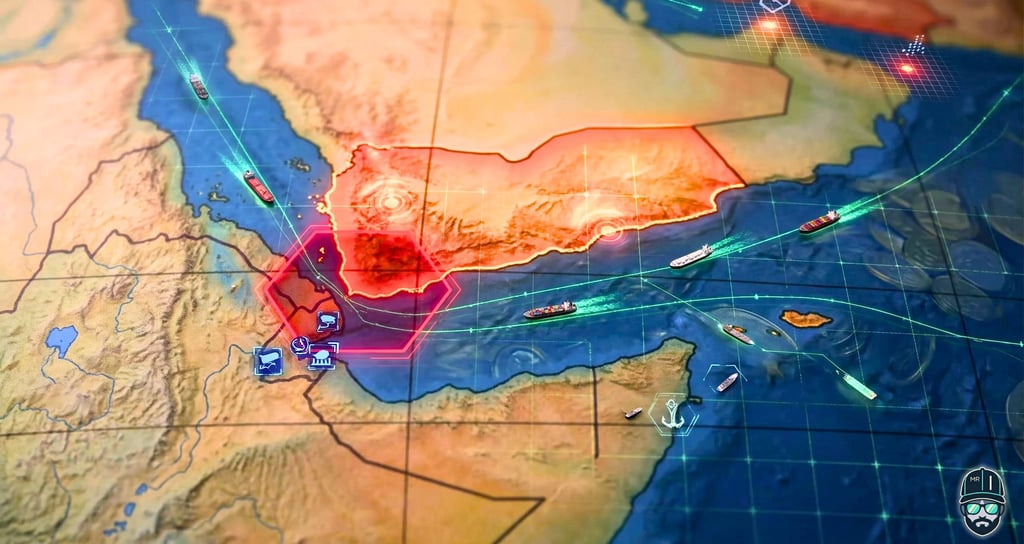
In Arabic, Bab-el-Mandeb translates to "The Gate of Grief" or "The Gate of Tears." For centuries, the name served as a grim warning about the treacherous currents and navigational hazards that claimed the lives of countless sailors. Today, however, the tears this strait threatens to provoke belong not just to mariners, but to central bankers, global leaders, and everyday consumers around the world.
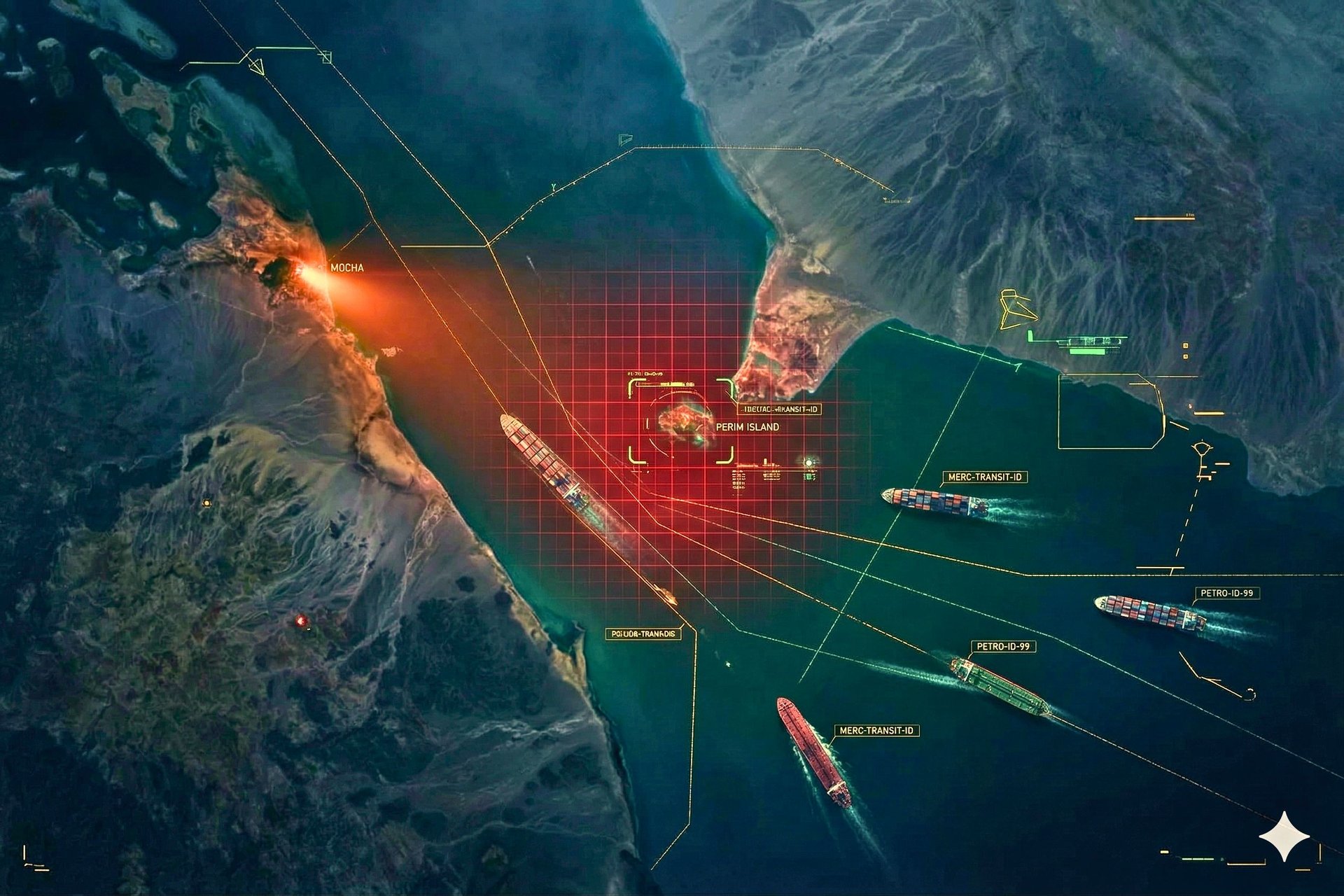
Spanning a mere 26 kilometers (about 16 miles) at its narrowest point, this maritime corridor between Yemen and the Horn of Africa is the jugular vein of modern globalization. If it is severed, the entire world bleeds.
The Anatomy of a Chokepoint: Navigating the Danger Zone
The Bab-el-Mandeb Strait is the critical southern gateway connecting the Indian Ocean to the Red Sea and, ultimately, the Suez Canal. Since the canal's opening in 1869, this route has effectively rewritten the map of global trade, allowing ships to bypass the massive African continent.
To understand the gravity of the current crisis, one must look at the sheer volume of wealth floating through these waters:
The Artery of Trade: Approximately 10% to 12% of all global seaborne trade passes through this narrow gap. That equates to tens of billions of dollars daily in manufactured goods, technology, and food moving between Asia, Europe, and the Americas.
The River of Oil: In normal conditions, roughly 6.2 million barrels of petroleum cross the strait every single day—accounting for nearly 9% to 12% of the world's seaborne oil shipments, alongside vast quantities of liquefied natural gas (LNG) and diesel.
The Pirate's Playground (A Dual Threat): As if geopolitical warfare wasn't enough, the geography of the strait forces ships into the Gulf of Aden, skirting the coast of Somalia. For decades, this area has been a notorious hotbed for maritime piracy. Even before the current geopolitical crisis, commercial captains had to navigate a gauntlet of heavily armed Somali pirates operating out of fast skiffs, seeking multi-million-dollar ransoms. Today, crews face an unprecedented dual nightmare: the historical threat of pirate boardings from the sea below, and the modern threat of ballistic missiles raining from the sky above.
The Lords of the Red Sea: Understanding the Houthis
To comprehend why the strait is under siege, we must examine the actors holding their fingers on the trigger. The Houthis—formally known as Ansar Allah (Supporters of God)—are a complex political, religious, and military force.
Roots and Rebellion: Emerging in northern Yemen in the 1990s, the movement is rooted in Zaydism, a distinct branch of Shia Islam. What began as a cultural revival against perceived Saudi-backed marginalization eventually morphed into a hardened armed insurgency. By 2014, taking advantage of a fractured state, they captured Yemen's capital, Sanaa.
The "Axis of Resistance": The Houthis are not fighting in isolation. They are a pivotal, heavily armed faction of the Iran-led "Axis of Resistance," fighting against a Saudi-led coalition, the official Yemeni government, and Western powers. Iran has supplied them with the asymmetrical warfare playbook: sophisticated anti-ship ballistic missiles and kamikaze drones that cost a fraction of the cargo ships they destroy.
The Current Cause: Following the outbreak of the war in Gaza, the Houthis declared they would target any vessel with even distant ties to Israel, the U.S., or the U.K., framing their blockade as an act of solidarity with Palestinians. In doing so, they discovered a terrifying geopolitical leverage: they can effectively hold the global supply chain hostage from the deserts of Yemen.
The Economic Domino Effect
What happens in the Red Sea does not stay in the Red Sea. When Bab-el-Mandeb becomes a war zone, the world's largest shipping conglomerates are forced to make a drastic choice: risk their crews and cargo, or reroute around the Cape of Good Hope at the southern tip of Africa.
This detour triggers a devastating economic domino effect:
The Logistics Collapse: Bypassing the strait adds 10 to 15 extra days to a voyage between Asia and Europe. This requires burning massively more fuel and deploying more ships just to maintain delivery schedules. Consequently, maritime freight rates have repeatedly doubled or tripled, and insurance premiums for vessels daring to cross the Red Sea have skyrocketed.
The Energy Shock: With Gulf oil and diesel taking the long way around Africa to reach Europe, transport costs surge. This dynamic pushes marginal oil onto higher-cost freight routes, directly inflating the price of diesel and gasoline at the pump for everyday consumers.
Agribusiness and the Fertilizer Crisis: This is the most silent and systemic threat. Bab-el-Mandeb is a vital artery for agricultural commodities (wheat, rice) and fertilizers moving from Russia and the Middle East to agricultural powerhouses like Brazil, India, and parts of Africa. Delayed fertilizer shipments force farmers to miss critical sowing windows and drive up the cost of crop production. The ultimate result? A global spike in food prices.
A New Wave of Inflation: The IMF has issued stark warnings regarding these chokepoints. Sustained disruptions in energy and transport can add up to a full percentage point to global headline inflation, forcing central banks to keep interest rates higher for longer and suffocating economic growth.
The Nightmare Scenario: Bab-el-Mandeb + Hormuz
While the current situation is dire, military and economic strategists are losing sleep over the ultimate doomsday configuration: the simultaneous closure of the Bab-el-Mandeb Strait and the Strait of Hormuz.
The Strait of Hormuz, flanked by Iran and the UAE, is the undisputed king of maritime chokepoints, handling roughly 20 million barrels of oil a day (about 20% of global consumption).
If a regional conflict were to escalate, prompting Iran or its allies to shut down Hormuz while the Houthis hold Bab-el-Mandeb:
The Great Blackout: Between 25% and 30% of the world's seaborne oil trade would be instantly paralyzed.
Triple-Digit Oil: Global markets would face an immediate, historic supply shock, likely sending the price of a barrel of crude rocketing well into the high triple digits within weeks.
Systemic Collapse: Energy-hungry regions like Europe and East Asia would face the very real prospect of rolling blackouts, forced industrial shutdowns, and rationing.
Global Recession and Escalation: The macroeconomic fallout would mirror the devastating oil crises of the 1970s, almost certainly triggering a deep global recession by 2027 or 2028. Furthermore, major world powers would view the reopening of these straits as an existential necessity, drastically increasing the likelihood of a full-scale global military intervention.
The modern world relies on an incredibly efficient, finely tuned logistical machine. But the escalating crisis in the Bab-el-Mandeb Strait—compounded by the lurking shadows of Somali piracy and the looming threat over the Strait of Hormuz—proves that globalization has an Achilles' heel. It is a fragile system where a conflict on the shores of Yemen can dictate the price of bread in Brazil, the cost of heating a home in Europe, and the trajectory of the global economy.