

The Modern Survivor’s Reading List: 20 Books to Decode the World
Most reading lists on the internet are digital pacifiers. They feed you feel-good illusions about "manifesting" success, waking up at 5 AM, and thinking positive thoughts. They are designed to keep you sedated, optimistic, and entirely blind to how the machinery of the real world actually operates. This is different.
Mr. Influenciado
3/4/20266 min read
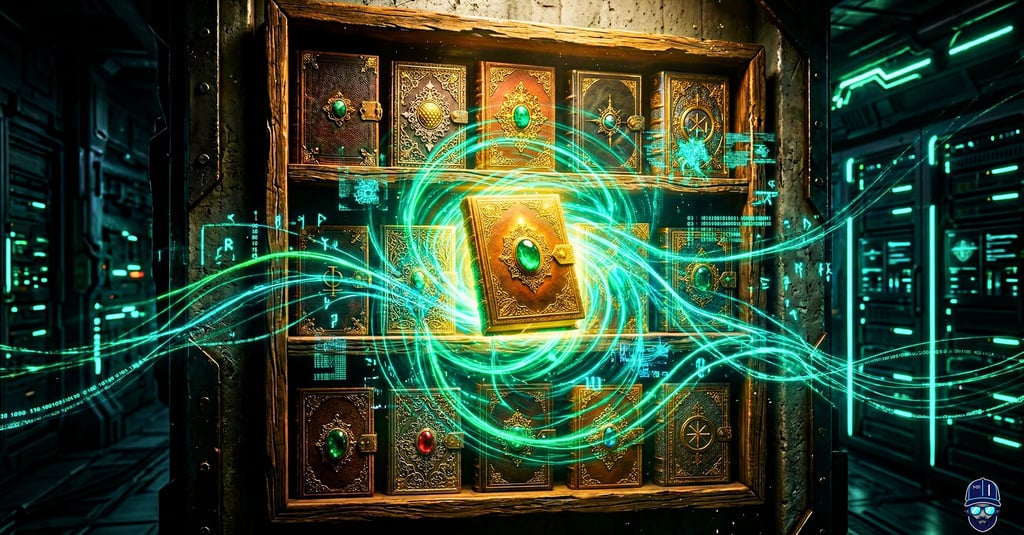

This is not a reading list. It is a neurological software update. Choose to install the patch, or let the algorithm dictate your reality.
What you are about to read is a reprogramming script. It is a sequential, four-phase architecture designed to strip away your cognitive biases, teach you the unforgiving laws of physics and economics, and show you exactly how power, propaganda, and human incentives move the world.
The Law of Cognitive Friction (Read This First)
Before you begin, a warning: these books are not easy. Some are dense, dry, and mathematically unforgiving. You will feel the urge to put them down and check your phone.
Understand this: the modern internet has conditioned you for frictionless consumption. Bite-sized videos, summarized threads, and AI-generated overviews. This lack of friction is causing cognitive decay. If a book is easy to read, it is not upgrading your brain; it is merely entertaining you.
True cognitive expansion requires friction. You must wrestle with complex syntax to grasp complex realities. When a concept forces you to stop, re-read a paragraph three times, and feel frustrated, that is the exact moment your neurological pathways are being rewired. To achieve a refined, superior understanding of the world, you must subject your mind to the resistance of complicated, elaborate thought. Do not run from the friction. Embrace the weight.
Consider this your blueprint for cognitive sovereignty. Welcome to the crucible.
QUARTER 1: THE HARDWARE & THE BUGS (Levels 0 & 1)
You cannot process reality until you stabilize your biology and recognize the mathematical flaws in your own brain. This is your biological baseline.
1. Why We Sleep by Matthew Walker
The Mechanism: The mechanical manual for your neurological hardware.
The Value: You think you are "hustling" by sleeping four hours a night; in reality, you are actively inflicting brain damage. Understand exactly how a lack of sleep destroys memory encoding, emotional regulation, and your ability to execute. Fix the machine before you try to race it.
2. Meditations by Marcus Aurelius
The Mechanism: The original operational manual for maintaining cognitive stability in high-stress environments.
The Value: This is not abstract philosophy; it is emotional architecture written by a Roman Emperor commanding a world at war. It provides the tactical framework to build a fortress in your mind that no algorithm, no crisis, and no external noise can breach.
3. Man's Search for Meaning by Viktor Frankl
The Mechanism: The Resilience Engine.
The Value: Written by a psychiatrist who survived the horrors of Auschwitz, this book teaches you how to decouple your internal locus of control from external, systemic suffering. Once you install this mindset, psychological collapse in the modern world becomes nearly impossible.
4. Thinking, Fast and Slow by Daniel Kahneman
The Mechanism: The definitive guide to the bugs in human software.
The Value: Your brain defaults to lazy heuristics and predictable cognitive traps. Before you can trust your own judgment, you must understand how easily you are fooled by your own mind. This book patches the vulnerabilities in your logic.
5. The Beginning of Infinity by David Deutsch
The Mechanism: The Epistemological Parser.
The Value: Installs the exact definition of a "good explanation." It immunizes you against structural pseudoscience, viral fake news, and teaches you the ultimate truth: all problems—without exception—are solvable through the acquisition of the right knowledge.
QUARTER 2: RULES OF THE MATERIAL BOARD (Levels 1 & 2)
Transitioning from abstract logic to physical, probabilistic, and economic reality. The universe doesn't care about your feelings; it operates on math, energy, and risk.
6. How Not to Be Wrong by Jordan Ellenberg
The Mechanism: The Applied Math Parser.
The Value: Strips away boring academic formulas and installs applied statistics into your daily thinking. You will stop being fooled by linear assumptions in a chaotic, non-linear world. It transforms math from a school subject into a survival tool.
7. Thinking in Bets by Annie Duke
The Mechanism: The Decision Framework.
The Value: You cannot control luck, but you can control probabilistic logic. Written by a professional poker champion, this book installs the algorithm for making high-stakes decisions under extreme uncertainty without succumbing to emotional paralysis.
8. Basic Economics by Thomas Sowell
The Mechanism: The Micro-Economic Engine.
The Value: Before understanding global empires or tech monopolies, you must understand price mechanisms, supply, demand, and how capital physically moves based on human incentives. This dense volume removes all emotional and political bias from how you view money.
9. Energy and Civilization: A History by Vaclav Smil
The Mechanism: The ultimate red pill for the physical world.
The Value: It proves that every human structure—from the internet to modern mega-cities—is entirely downstream of agricultural yield, prime movers, and thermodynamic efficiency. It demands deep focus, but you will never look at the modern world the same way again.
10. The Knowledge: How to Rebuild Civilization by Lewis Dartnell
The Mechanism: Reverse-engineer the baseline that keeps you alive.
The Value: If the grid goes down, what do you actually know how to do? This book maps the chemical, mechanical, and infrastructural foundations of human survival. It grounds your hyper-digital life in undeniable physical reality.
QUARTER 3: PEOPLE, POWER & INCENTIVES (Level 3)
Now that you understand math and matter, you will map how humans fight to control them. This is the dark matrix of global reality.
11. The Dictator's Handbook by Bruce Bueno de Mesquita
The Mechanism: Destroys the illusion of altruistic politics.
The Value: Maps exactly how power is acquired and maintained through the ruthless distribution of resources to key stakeholders. Once you absorb this grim reality, every political headline will look like predictable, basic math.
12. Prisoners of Geography by Tim Marshall
The Mechanism: Ideology ends where geography begins.
The Value: Explains why nations behave the way they do based strictly on their physical constraints—mountains, rivers, and oceans. It is the geographic cheat code to understanding global conflicts and supply chain wars.
13. Principles for Dealing with the Changing World Order by Ray Dalio
The Mechanism: The Macro-Economic Engine.
The Value: Reduces the rise and fall of empires into a predictable algorithm driven by debt cycles, internal conflict, and currency debasement. A mandatory, friction-heavy read to understand the current geopolitical shift and protect your assets from systemic collapse.
14. Skin in the Game by Nassim Nicholas Taleb
The Mechanism: The ultimate asymmetry filter.
The Value: Teaches you to instantly ignore the advice, predictions, or policies of any actor who does not suffer the material consequences of being wrong. It is your ultimate defense against modern charlatans and institutional bureaucrats.
15. Propaganda by Edward Bernays
The Mechanism: The foundational text on engineered desire.
The Value: Written by the father of public relations, this book exposes how public opinion and human desires are algorithmically engineered by invisible institutional architects. Read it to cut the strings and stop being a puppet to mass media.
QUARTER 4: THE ARCHITECT'S SYNTHESIS (Level 4)
Combining domains to build anti-fragile, sovereign systems. This is where you synthesize the chaos and become unbreakable.
16. Thinking in Systems: A Primer by Donella Meadows
The Mechanism: The foundational text for reading reality.
The Value: Learn to map the invisible feedback loops, delays, and structural traps that govern everything from ecologies to stock markets. You will stop reacting to isolated events and start manipulating the matrix itself.
17. The Logic of Failure by Dietrich Dörner
The Mechanism: A clinical analysis of systemic collapse.
The Value: Human brains evolved for linear, immediate problems. This dense study explains why we routinely cause catastrophic failures when managing complex, time-delayed systems—and how to avoid being the architect of your own ruin.
18. Antifragile by Nassim Nicholas Taleb
The Mechanism: The mathematical framework for true resilience.
The Value: Resilience is merely surviving a shock. Antifragility is gaining strength from the shock. This book requires intense mental effort, but it teaches you how to build projects, portfolios, and a human identity that feeds on volatility and thrives under attack.
19. Range by David Epstein
The Mechanism: The scientific argument for the polymath.
The Value: Proves why generalists who synthesize multiple domains ultimately defeat highly optimized specialists in volatile, unpredictable environments. The future belongs to those who connect the dots, not those who specialize in just one.
THE HORIZON TARGET (The Maturity Checkpoint)
Do not attempt to read this until you have shipped real-world projects and stabilized your reality.
20. Groundwork of the Metaphysics of Morals by Immanuel Kant
The Mechanism: The Ethical Anchor.
The Value: This is the ultimate test of cognitive friction. Once you possess the power to manipulate systems and understand human incentives, you face the very real danger of becoming a cynical parasite. Kant forces you to build a rigorous, structural framework for ethics based on pure reason, ensuring your actions are sustainable, not just selfishly optimal.
You have reached the end of the blueprint. Statistically, 90% of the people who read this list will bookmark the page, feel a fleeting sense of intellectual accomplishment, and never actually wrestle with a single chapter.
That is exactly what the algorithmic machine relies on. It banks on your complacency. It thrives on your biological preference for comfort over friction.
Ignorance in the modern age is no longer an accident; it is a choice. You can choose the easy path: let the algorithms feed you synthesized, pre-chewed opinions while your autonomy slowly erodes. Or you can choose the hard path: subject yourself to the brutal friction of dense, time-tested knowledge, and build a mind capable of decoding the chaos.
The system is functioning exactly as designed. It will not slow down. It will not pity you. The only variable left in the equation is what you decide to do next.
Pick your level. Acquire the asset. Embrace the friction.
Start building your vault.