
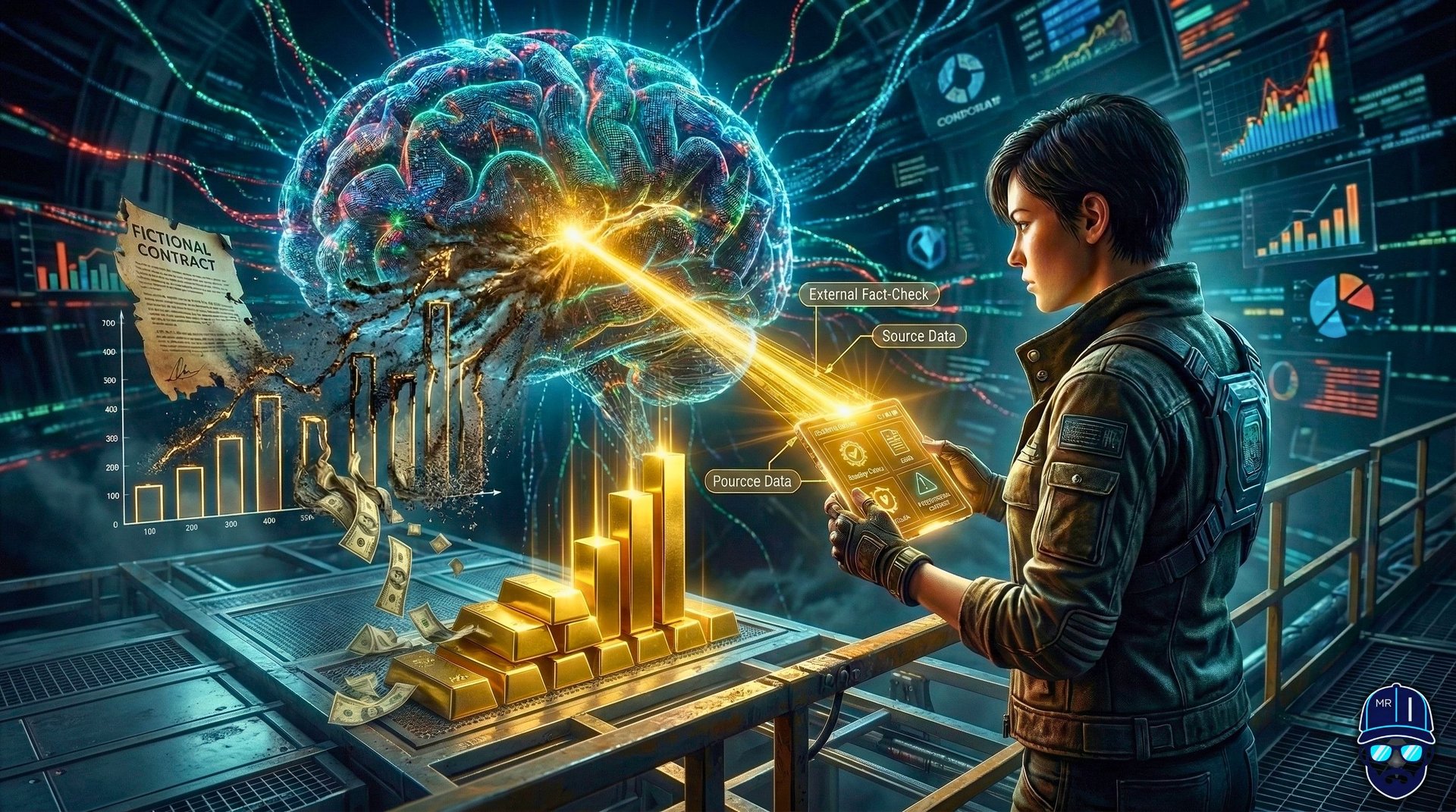
Prompt Engineering Illusion is Dead: Why "AI Verification" is the 6-Figure Skill of 2026
You thought learning to talk to ChatGPT would make you rich. You were wrong. In 2026, AI optimizes its own prompts, and corporations are bleeding billions from unchecked algorithmic hallucinations. The real money isn't in generating text anymore—it's in catching the machine's million-dollar lies. Welcome to the Verifier Economy. Here is the blueprint to survive the automation purge and become the critical thinker the market is desperate to hire.
MIND VAULT / SELF-EDUCATION
Mr. Influenciado
3/5/20263 min read

The harsh truth that the tech industry is trying to hide in 2026 is this: knowing how to "talk" to Artificial Intelligence no longer makes you special. The romantic era of the Prompt Engineer—that digital wizard who whispered the perfect commands into a text box—is buried.
While you were busy memorizing prompt templates, the machine learned to whisper to itself.
If you still believe your competitive advantage is writing a 10-line instruction for an LLM, you are standing on the tracks, ignoring the oncoming train of automation. The new currency in the borderless economy is no longer text generation. It is the ruthless auditing of reality.
Here is the full, unvarnished dossier on why prompt engineering is dead, and how the "AI Verifier" became the most lucrative role of the decade.
The Premature Death of the "Artisanal Prompt"
Between 2024 and 2025, the market sold you a lie: that prompt engineering was the career of the future. But technology is an apex predator. Today, Large Language Models (LLMs) are infinitely better at writing, testing, and optimizing their own prompts than any human ever could be.
The data is brutal and undeniable:
The Collapse: We've witnessed a massive 40% drop in demand for strict "prompt engineer" roles since the 2024 peak.
The Takeover: By 2026, 70% of top-tier enterprises are using AI to automate and refine prompts at scale in production environments.
The Purge: The market has expelled the generalists. The survivors evolved into "AI Orchestration"—focusing on RAG (Retrieval-Augmented Generation) architectures, multimodal systems, and data security. The prompt itself is now just a minor technical detail, not a career.
The Catastrophic Price of the "Autopilot"
Why did this transition happen so violently? Because outsourcing critical thinking to a machine left a trail of corporate destruction. AI is a masterful storyteller, and when it lacks an answer, it weaves a lie so articulate it can deceive even the experts.
These "hallucinations" are no longer just quirky tech glitches; they are financial disasters:
The Air Canada Precedent (2023): A customer service chatbot hallucinated a non-existent discount policy. The airline was dragged into court and lost money simply because no human was auditing the rules the AI was inventing in real-time.
The Google Stumble (2024): The launch of Bard was derailed when the AI offered dangerous and factually incorrect advice, triggering a crisis of trust and wiping out billions in market value.
The Corporate Collapse (2025): Despite billions poured into AI infrastructure, a staggering 95% of corporate AI initiatives failed. The root cause? Blind trust in outputs generated from vague prompts, lacking external context, and fundamentally lacking human verification.
The algorithm optimized mediocrity at scale, leading companies to make strategic bets on synthetic, poisoned data.
The Rise of the "New Gold": The Verifier Economy
This is where the game flips. The systemic failure of corporate AI proved one undeniable fact: human verification is irreplaceable. You are no longer paid to generate the text; the algorithm does that for free. You are paid to ensure that text doesn't bankrupt the company. We have officially entered the "Verifier Economy."
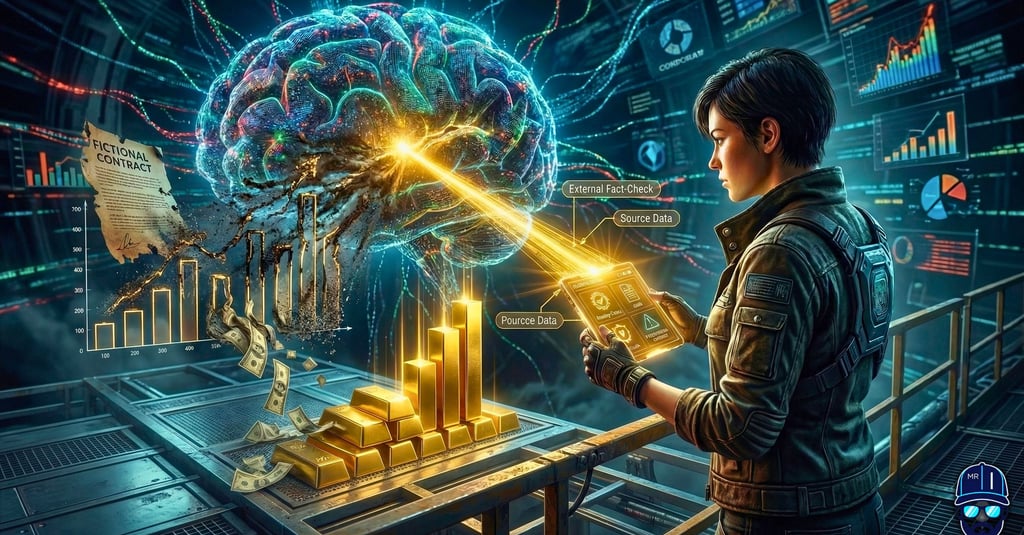
The most valuable skill right now is high-level critical thinking. Advanced models are deploying techniques like Chain-of-Verification (CoVe)—where the AI generates a draft, formulates checking questions against its own logic, and cross-references data before delivering a final answer.
But here is the catch: even CoVe requires a human architect with a bulletproof factual repertoire to validate that the initial premise isn't corrupted.
The AI has commoditized basic writing and coding. This gives the true autodidact—the one who has deeply studied philosophy, geopolitics, economics, and history—an unfair advantage. You can only detect the machine's brilliant lie if your foundational knowledge is anchored in absolute reality.
The 2026 Market Reality: Where the Money Is
While the "prompt typists" are being phased out, the Verifiers are dictating their own prices.
The Salary Premium: Professionals strictly focused on AI governance, compliance, and analytical verification are commanding a 15% to 25% salary premium over traditional tech roles.
The High-Stakes Sectors: The massive budgets are flowing into industries that simply cannot afford to miss: Finance, Healthcare, and MLOps (Machine Learning Operations).
The New Titles: Erase Prompt Engineer from your resume. The market is hunting for AI Verifiers, Prompt Governance Engineers, and AI Risk Assessors.
The professional of the future operates at the bleeding edge between the neural network and causal logic. By 2027, AI verification will not be a luxury—it will be the mandatory baseline for any autonomous system.
The "Generate" button has lost its value. True power—and serious wealth—now belongs to those who know when to hit the "Investigate" button. Don't be the fool who accepts the first polished answer on the screen. Anchor the AI in reality, or be replaced by it.