
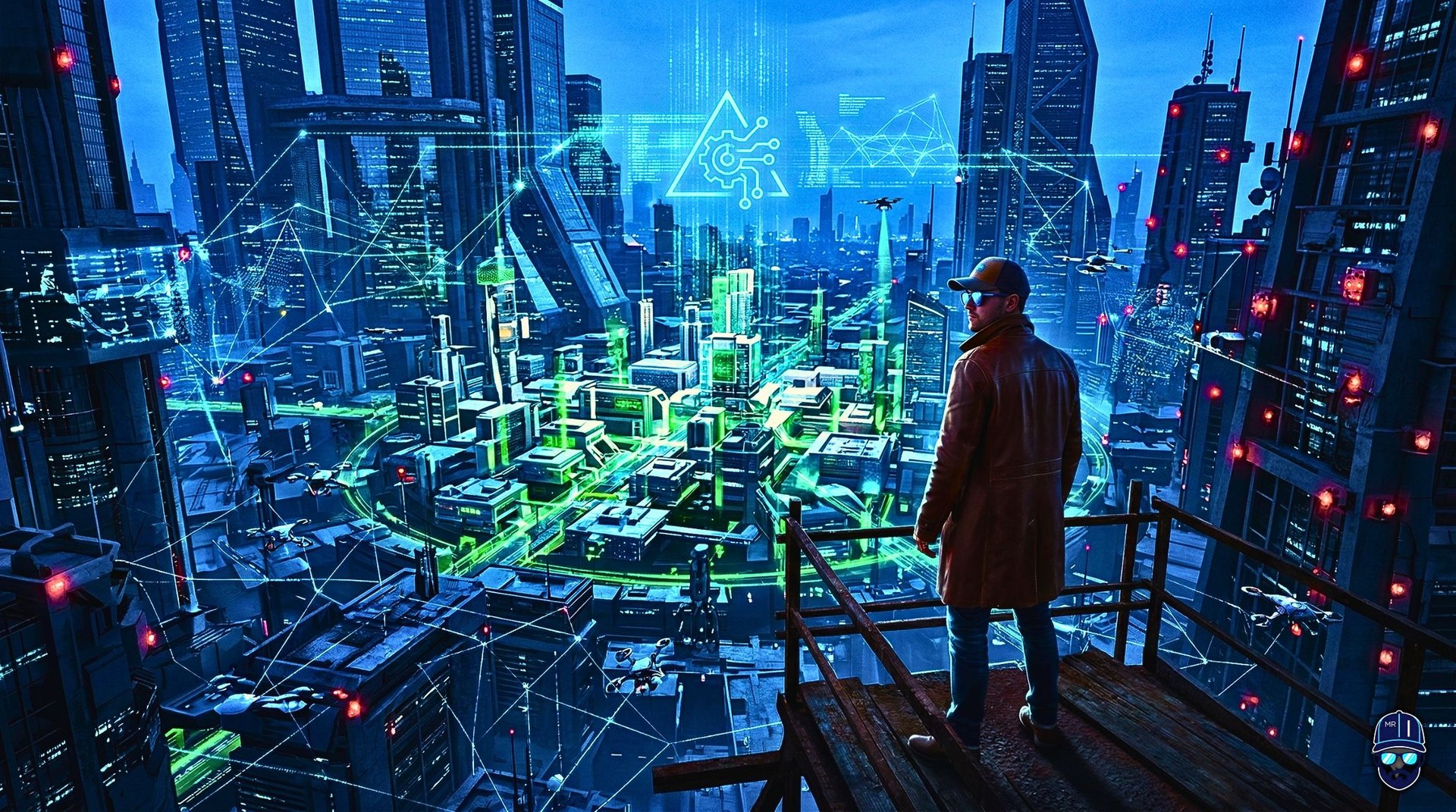
Technocracy: The End of Politics or the Dawn of Absolute Control?
Imagine a world without politicians, where scientists, engineers, and algorithms make every decision. Technocracy promises the end of scarcity, but what is the true cost of this controlled utopia?
Mr. Influenciado
3/6/20264 min read
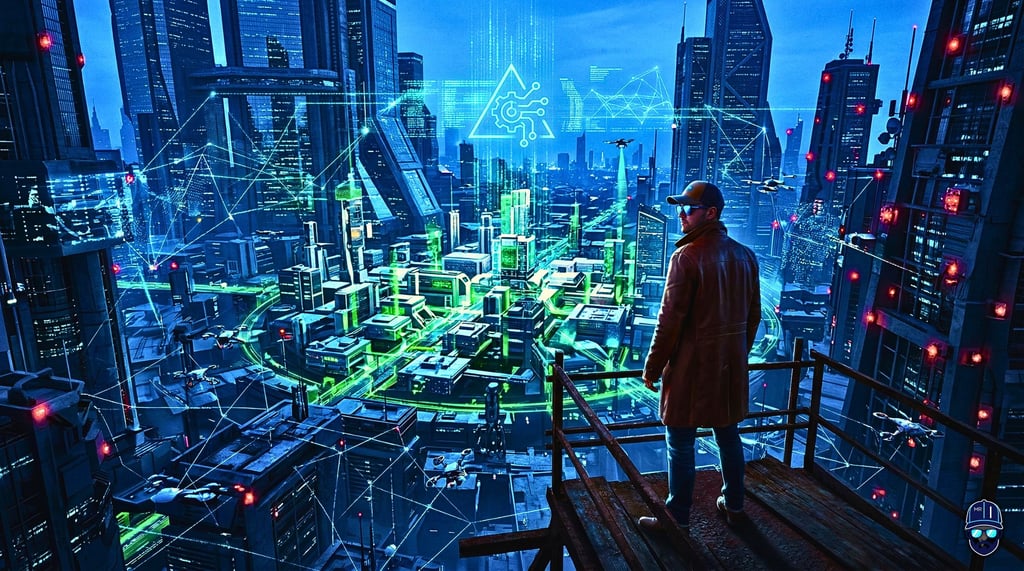
Imagine waking up in a world where your vote doesn't elect a president, but rather an operating system managed by experts. There are no campaigns, no ideological debates, and, most strikingly, there is no money. Instead, society is run like a massive engineering machine, where every resource is calculated and distributed with mathematical precision.
Welcome to Technocracy.
What sounds today like the script of a sci-fi dystopia was, in fact, one of the most fascinating and radical political and economic movements of the 20th century. And, surprisingly, its gears are still silently turning in the modern world.
In this deep dive from Mr. Influenciado, we will unravel the history, the megalomaniacal plans, and the very real dangers of the system that proposes replacing partisan politics with the undeniable coldness of data.
The Genesis of the Machine: Replacing Politicians with Engineers
The idea that the world should be governed by the most capable is not new. Pythagoras once spoke of the "rule of the wise." However, the foundation of modern technocracy began to be forged in the 19th century with the French philosopher Henri de Saint-Simon (1814) and, later, with the sociologist Thorstein Veblen, who idealized a "Soviet of Technicians."
But it was in 1919 that inventor William Henry Smyth coined the term that would christen the movement:
"Technocracy is the rule of the people made effective through the agency of their servants, the scientists and engineers." — William Henry Smyth
The true explosion of the idea occurred in the United States after World War I. In 1919, Howard Scott founded the Technical Alliance, a group that initiated an ambitious energy survey of North America. When the Great Depression devastated the global economy in 1929, the traditional capitalist model seemed to have failed. It was the perfect backdrop for the rise of Technocracy Inc. between 1932 and 1933.
The promise was radical: abolish the price system. To technocrats, money caused inequality and waste. The solution was to replace it with "energy accounting". Instead of dollars, citizens would use "Energy Certificates," based on the continent's productive capacity and energy consumption. The ultimate goal was not profit, but "sustainable abundance."
The Technate of the Americas: The Great Continental Plan
The technocrats did not think small. They didn't want to reform a country; they wanted to redesign an entire continent. The movement's most audacious project, drafted in 1937, was called The Technate of the Americas.
The plan proposed the creation of an autarkic (self-sufficient) superstate that would unite:
All of North America.
Central America and the Caribbean.
Northern South America (including Colombia and the Guianas).
From Greenland all the way to the Pacific Ocean.
To ensure total independence regarding natural resources and military protection, maps drawn between 1937 and 1940 showed the establishment of impenetrable defense bases in strategic locations like Pearl Harbor, Bermuda, and the Galapagos Islands.
The Technate would be divided into geographic quadrants (2° latitude by longitude) and managed by a continental board of experts. The concept of work would be revolutionary:
Continuous operation shifts: Production would never stop (24/7).
Reduced workweek: The calendar envisioned only 4 workdays a week, with 4-hour daily shifts.
Titanic infrastructure: "Continental hydrology" projects aimed to interconnect major rivers for massive logistical transport and power generation.
Real-time management: Long before the internet, they idealized computerization for real-time inventory and resource allocation.
Traditional businessmen would be excluded from power. Executive councils would be formed entirely by engineers and scientists.
The Technocratic Echo in Brazil
Brazil was not immune to the pragmatic charm of technocracy. In 1926, Abílio de Nequete founded the Technocratic Party on Brazilian soil.
Although the party itself did not seize power, technocratic ideals deeply influenced the country's political history:
Estado Novo (Vargas Era): The centralization of decisions in technical councils and a strong emphasis on building national infrastructure.
Military Dictatorship (1964-1985): The regime heavily flirted with technocracy, placing ministers with purely academic and technical profiles (the "technocrats") in charge of the economy. This approach, focused on macroeconomic data and pharaonic construction projects, elevated Brazil from the 49th to the 8th largest economy in the world, although it ignored severe social and human rights issues.
In the recent democratic era, we've seen diluted echoes of this model in nationalist speeches emphasizing "technical order," such as those promoted by the extinct PRONA party (led by Enéas Carneiro) and certain wings of the PDT.
Technocracy 2.0: The Modern Digital Dystopia
Technocracy Inc. lost momentum with the implementation of Roosevelt's New Deal, but the essence of the movement did not die. It simply went digital. Today, there is no "pure" technocracy, but we live in a world governed by Technocracy 2.0.
Singapore and the Smart Nation: The city-state uses a massive infrastructure of AI (Artificial Intelligence) and IoT (Internet of Things) to manage everything from traffic to civic behavior.
The Chinese Approach: The Chinese government is frequently cited as a modern technocracy, largely run by engineers in its upper echelons and utilizing algorithmic surveillance and a Social Credit System.
European Union: Governance heavily based on data-driven decisions, where committees of experts often make economic choices that override the political will of member nations.
Critics and analysts sound the alarm: the advancement of Digital IDs, biometric surveillance, and even certain goals of Agenda 2030 could be the pillars of a new, unelected global governance. It is the management of society by algorithm.
Paradise of Efficiency or Hell of Control?
If a purely technocratic system, turbocharged by today's Artificial Intelligence, were implemented tomorrow, the consequences would be extreme:
The End of Waste: Global logistics would reach maximum optimization. Hunger and scarcity could be eradicated through the precise calculation of the supply chain.
Impartial Decisions: With no political lobbying or re-election at stake, unpopular but necessary measures to save the environment or the economy would be executed instantly.
The Dark Side (Problems and Risks):
Democratic Deficit: Accountability to society is eliminated. If the algorithm makes a mistake and harms millions, who gets fired? Who do you criticize?
Digital Divide and Elitism: Society would inevitably split between a ruling technical elite (those who program the machines) and the masses excluded from decision-making.
Dehumanization: Purely mathematical models fail to understand ethics, culture, and human nuances. AI policing already shows how historical data can generate automated prejudices relentlessly.
Technocracy points to an uncomfortable truth: our current political systems are inefficient, corrupt, and often irrational. However, the technical solution carries the germ of authoritarianism. Governments guided by AI and engineers might deliver the "abundance" promised by Howard Scott in the 1930s, but the price to pay is the voluntary surrender of our free will to a mathematical equation.
Ultimately, the great question posed by Technocracy is not whether we can be governed by machines and experts, but whether we want to live in a world where efficiency is the only metrics.